Para Los Niños began providing mental health care to families more than 20 years ago and remains the only children’s mental health provider in the Skid Row neighborhood. In the spirit of Mental Health Month, we want to share what makes our staff and program exceptional as well as encourage our community of staff, supporters and families to prioritize their wellbeing.
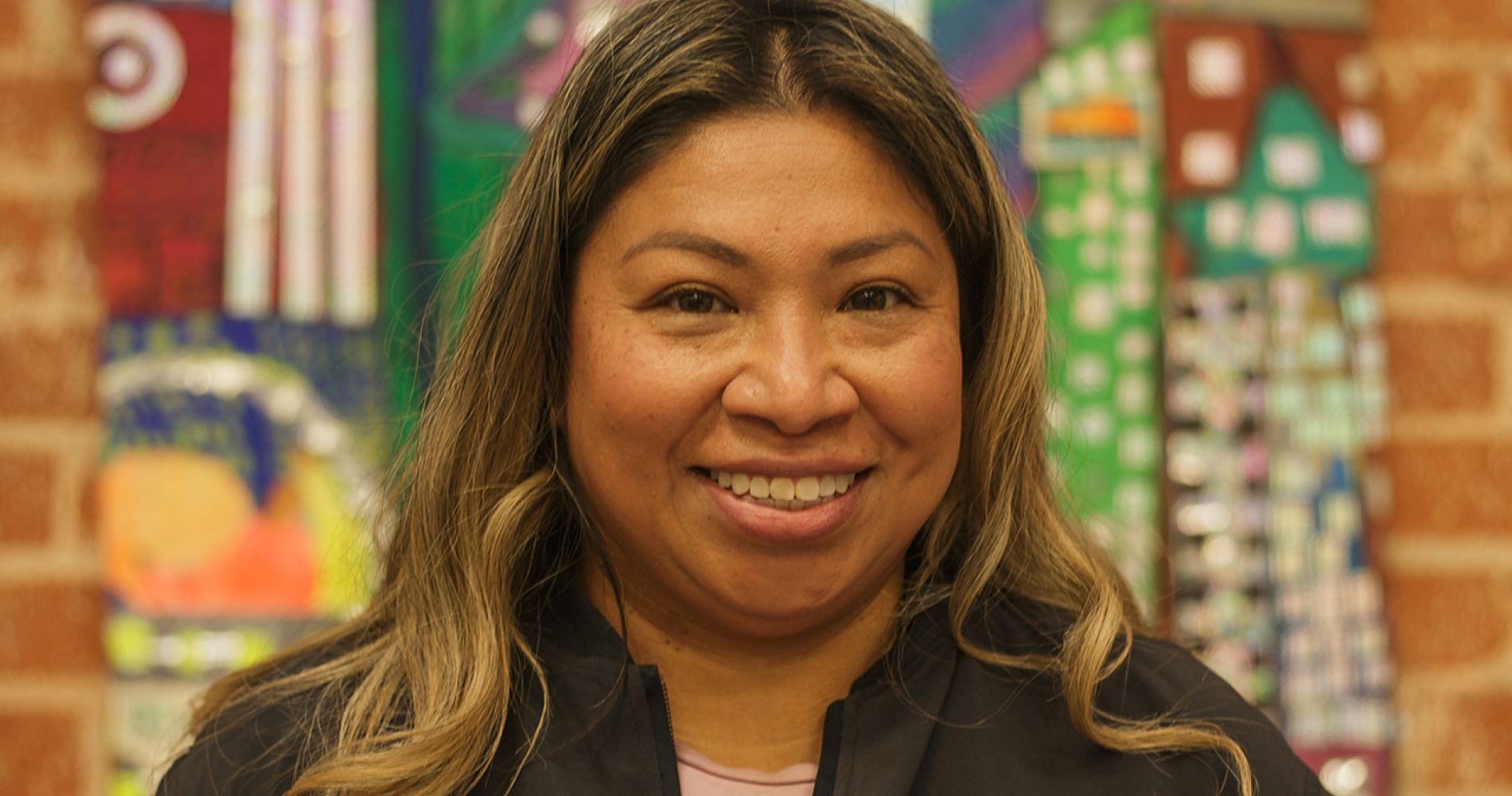
Daisy Dsul has been employed at Para Los Niños for 22 years, starting off as a teacher in PLN’s After School Program, joining the Youth Workforce Services team, and ultimately becoming a therapist with PLN’s Clinical Services program. Her journey may look like it has taken different paths, but her singular focus has always been supporting the children, youth, and families in her community.
As a first-generation Mexican American, Daisy saw first-hand the many challenges associated with navigating systems meant to support people. Serving as her mother’s interpreter from a very young age, she facilitated immigration services, appointments at the clinic, and applying for disability support. She saw many people throughout her childhood who struggled to access the support they deserved due to language barriers.
Para Los Niños is an organization of people committed to community-based, inclusive and culturally relevant care. So, as Daisy explored career opportunities at PLN, she was grateful to find she would be supporting families just like hers. “The majority of my work is in Spanish, which was a little bit hard, because you go to school, and you learn everything in English. But you practice and get better and better with experience and then it’s just like having a conversation.”
Daisy’s work exemplifies the relationship-based approach that defines PLN’s clinical services. It’s important for her to build trust with families, because she knows the stigma still associated with mental health care in the Latino community. “Growing up Latino, we didn’t talk about what happened at home. It was like, ‘we as a family will come together and find a solution to the problem.’ And you don’t talk about anything like that outside with a stranger,” says Daisy, “I want to let them know where I come from and that I was also the same, but in the end, you need that support.”
“I think that the reason people don’t share is because they think they’re going to be judged, and they don’t realize that that’s not the role of the therapist.” She encounters many families who at first think that therapy “doesn’t work,” is a “waste of time,” or its “for crazy people.” However, through patience, understanding and results, they come to see how mental health care is one of the many ways they can be there for their children and for themselves. “You cannot go to treatment right away. You have to get to know them and let them know, ‘I’m not here to criticize you; I’m here to help you.’”
Para Los Niños supports children as young as infants through its clinical services program, but at any age, all children need the support of their caregivers to have the potential for long-term wellbeing. This is called dyadic work, focusing on two people in relation to each other. In this case, therapists support how the parent relates to their child to give them the best support possible.
Trauma in young children can express itself in many ways, including excessive crying, tantrums, loss of sleep, separation anxiety, or isolation. Many times, parents interpret these as behavioral issues, not realizing that oftentimes the behavior is cued by the adults in the child’s life. So, caregivers learn key developmental stages in a child’s growth to recognize the differences in behaviors through life’s transitions. They also learn to regulate their own emotions, understand their triggers and sometimes even uncover how their own trauma might be impacting the relationship with their children. Co-regulation can look like anything from holding and rocking children to modeling taking deep breaths together.
Daisy specializes in supporting parents with children between birth to 5 years old, and says she enjoys witnessing breakthroughs caregivers experience through their work together. For example, she has supported parents who never played when they were young. “I’ve seen parents become teary-eyed, and I ask, ‘is everything OK?’ And they say yes, but back in their country, they had to work and didn’t have the privilege of having these kinds of toys. Many parents are also processing trauma through this experience.”
In PLN’s community in particular, trauma can often be linked to toxic stressors such as experiencing systemic discrimination or lack of stability due to extreme need. It can be difficult to support a family through mental health services when they are struggling to have their basic needs met, even if they know they need that support. Daisy has seen directly how support with food or housing can stabilize a family enough to focus on sustained healing. “I’ve been working with families at the Union Rescue Mission. They come to therapy, because they want it, but that’s not their first priority. Their priority is having a home of their own. When they are finally housed, therapy become smoother and more consistent.” This is why we are grateful to have a whole network of helpers at PLN to support families as they prioritize their needs, including partners in the Skid Row Collaborative, teams of family support specialists across programs, and funding that allows us to support families in staying and getting housed.
Therapists like Daisy, who understand and care for our communities in deep and nuanced ways, are what make this program special. “I love that Para Los Niños is more of a community. So, we try to bring together all these supportive services in case [families] need anything. What makes me happy is families getting the services they need, using all these tools we provide them and being successful in life.”
Happy Mental Health Month!
Interested in joining our team of highly-qualified and compassionate staff? Check out our Careers page.