More Than Academics:

How PLN Community Schools Uplift Families

Share

By Nick Curl


August 29, 2025

When one imagines a school, you picture classrooms, teachers, and students. Academic learning contained within four walls. But for Para Los Niños (PLN), that vision goes beyond classroom instruction. As PLN’s Director of Community Schools Diana Yi puts it, “A community school is really just a great school. It’s a hub that supports students, families, teachers, and staff with everything they need to thrive.” This vision is at the heart of PLN’s approach. Across Los Angeles, PLN is helping lead the way as part of California’s historic $4 billion investment in expanding community schools statewide. The goal: transform schools into places that remove barriers to learning and connect families with the resources, care, and opportunity.

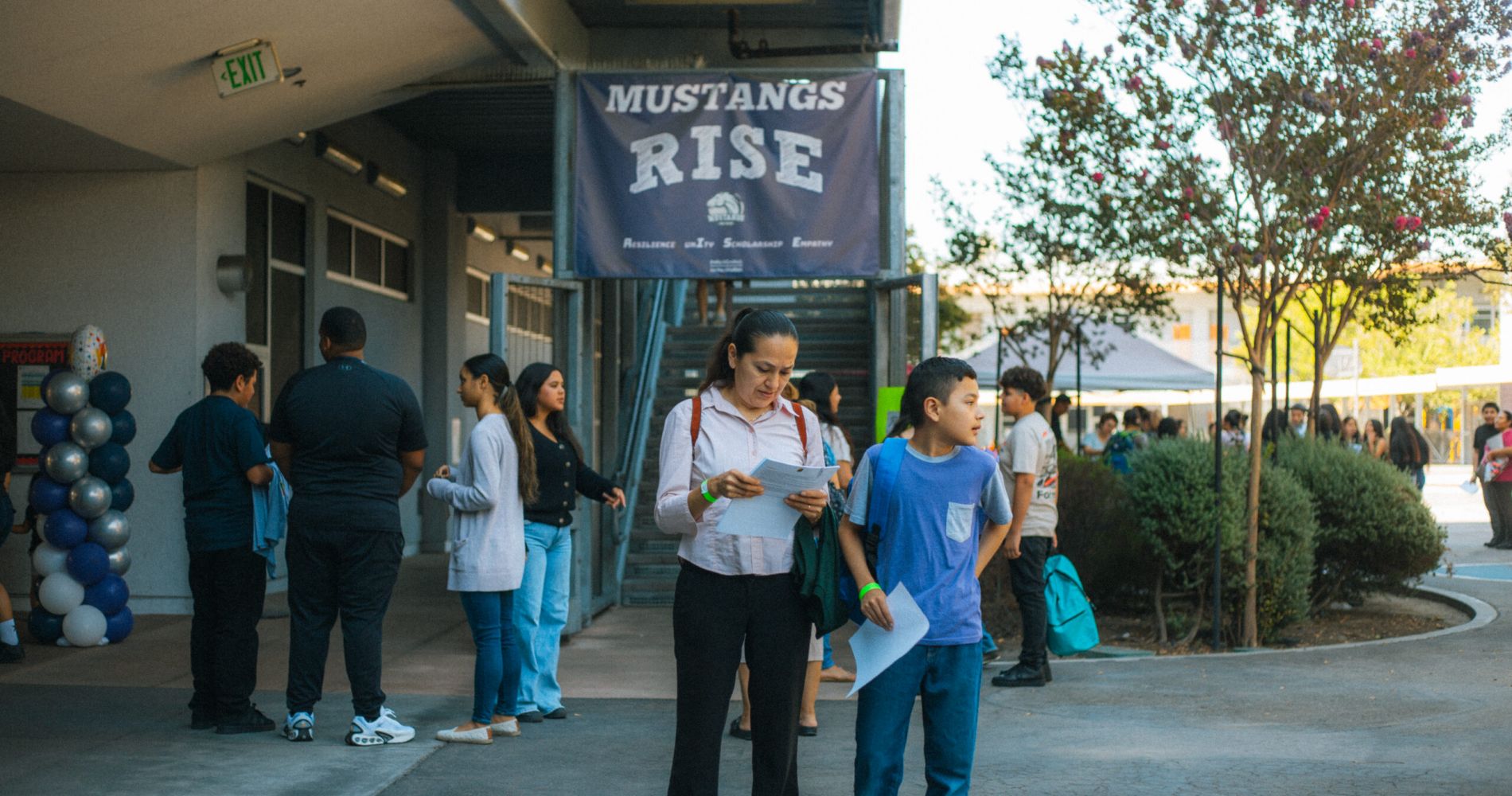
For PLN families, many of whom face housing instability, food insecurity, and/or limited access to healthcare, community schools are more than just places of learning. They are centers of support and connection, where academic growth is paired with holistic care and shared decision-making between educators and families.

What Makes a Community School?

Community schools are guided by four pillars:

  1. Collaborative leadership and practices
  2. Integrated student supports
  3. Family and community engagement
  4. Expanded learning opportunities

Community School Coordinator Jose Lopez explains: “We connect our families with valuable partnerships and services that remove barriers to attendance and help set up students for success. Families benefit from resources such as health clinics, housing assistance, and even transportation support. Together, these supports prevent issues keeping students out of class, improving daily attendance while also strengthening academic success and a sense of belonging.”

Take healthcare access. Through a partnership with the USC Herman Ostrow School of Dentistry’s Neighborhood Mobile Dental Van Prevention Program (NMDVPP), students have received free dental screenings and preventative care right in the school parking lot. Instead of missing school because of a toothache, children leave with cleanings, sealants, and referrals for further care, all provided on campus. Plans are also underway to launch a vision program to connect students with free eyeglasses, ensuring no child struggles in class simply because they can’t see the board. Another example is enrichment. Through PLN’s partnership with Inner City Arts, students explore ceramics, dance, painting, and drawing—opportunities that spark creativity and confidence. These programs not only nurture artistic skills but also build a sense of belonging, giving students outlets to express themselves beyond academics. Families benefit, too. Last year, PLN piloted cooking classes for families experiencing homelessness. Parents and children learned side by side, cooking healthy meals and connecting with other families in similar circumstances. What began as a simple idea became a safe, joyful space that helped families strengthen bonds and build community.
Why This Matters for PLN Families

The community schools strategy is powerful for any district, but it is especially critical for PLN families. Many of our students face obstacles that go far beyond making the grade.

“Community schools are especially well-positioned to serve families experiencing homelessness,” says Diana. “We take a holistic approach, making sure their basic needs are met, whether that’s food, housing support, or mental health services, so that students can continue learning with dignity.”

At a recent back-to-school event at Union Rescue Mission, Diana was reminded of the urgency of this work. Among the families she met were children brimming with excitement about learning: one boy eagerly read aloud every sign and flyer he saw, while a sixth-grade girl proudly showed off a STEM project she had created at her former school. “These students were eager to learn, even while living in unstable housing,” Diana recalls. “It was humbling to see their joy and potential, and it reminded me why community schools matter so deeply.”

For parents, the meaning is just as profound. As PLN parent Perla Lopez shares:

“To me, a community school is where families from many backgrounds come together to lift each other up. When we join forces—parents, teachers, neighbors—we create a stronger, more welcoming place for our kids to learn and grow. It’s not just about schools; it’s about building a caring, connected community.”

Shared Decision-Making

Perhaps the most unique feature of PLN’s community schools is the emphasis on shared decision-making. Families, teachers, staff, and students are not just participants in programs, they are partners actively shaping them.

Community School Team meetings bring these groups together to discuss priorities, identify needs, and brainstorm solutions. Out of these meetings, families have traveled with PLN staff to statewide conferences, gaining tools to advocate for their children and contribute to school strategy.

Diana describes the 2025 California Community Schools EMPOWER Summit in Fresno, CA where PLN parents attended workshops side by side with educators: “The moms were taking notes, asking questions, and engaging with facilitators. It was so powerful to see them recognized as experts in their own right.” At the middle school, PLN went a step further: families vetted and selected the parent workshop providers themselves, even attending demo sessions before making their choice. This shift—honoring parents a not as passive recipients but as active decision-makers—embodies the spirit of community schools. As Diana explains: “People closest to the problem often have the solution. Families’ voices matter, and they should be at the center of decisions that affect them.”

Looking Ahead

Looking forward, PLN’s community schools are building even deeper connections across the organization and with families. That means better integration with Family Services, Youth Workforce programs, and expanded learning so that families not only receive immediate support but also see long-term opportunities.

It also means creating more spaces for joy and belonging. Plans for the coming year include movie nights like “Popcorn Under the Stars” on the school playground, and instructional walkthroughs, where parents can step into classrooms to see their child’s learning in action.

Above all, the vision is to make schools places where children feel safe, supported, and excited to learn.

As Jose Lopez puts it:

“Community schools are centers where students, families, and the community come together. Everything we do comes from a place of genuine love—the authentic care and commitment we have for their children and families.”

At Para Los Niños, being a community school means more than offering classes or point-in-time services. It means building hubs of connection and care—places where a child can get a dental cleaning before math class, a parent can cook a meal alongside their daughter, or a family can share their voice in shaping the school’s future.

Community schools prove that education is not just about academics. It’s about dignity, belonging, and the belief that every child and their family deserves the chance to thrive. And at PLN, that belief is put into action every day.


Help us fortify this crucial network of support for our scholars by donating to this year’s Back-to-School fundraiser through September 15! Visit our back-to-school page to learn more.


Accreditations and Supporters


Stay Connected


© Para Los Niños 2021 // Privacy Policy

LGBTQ+ Safe Zone